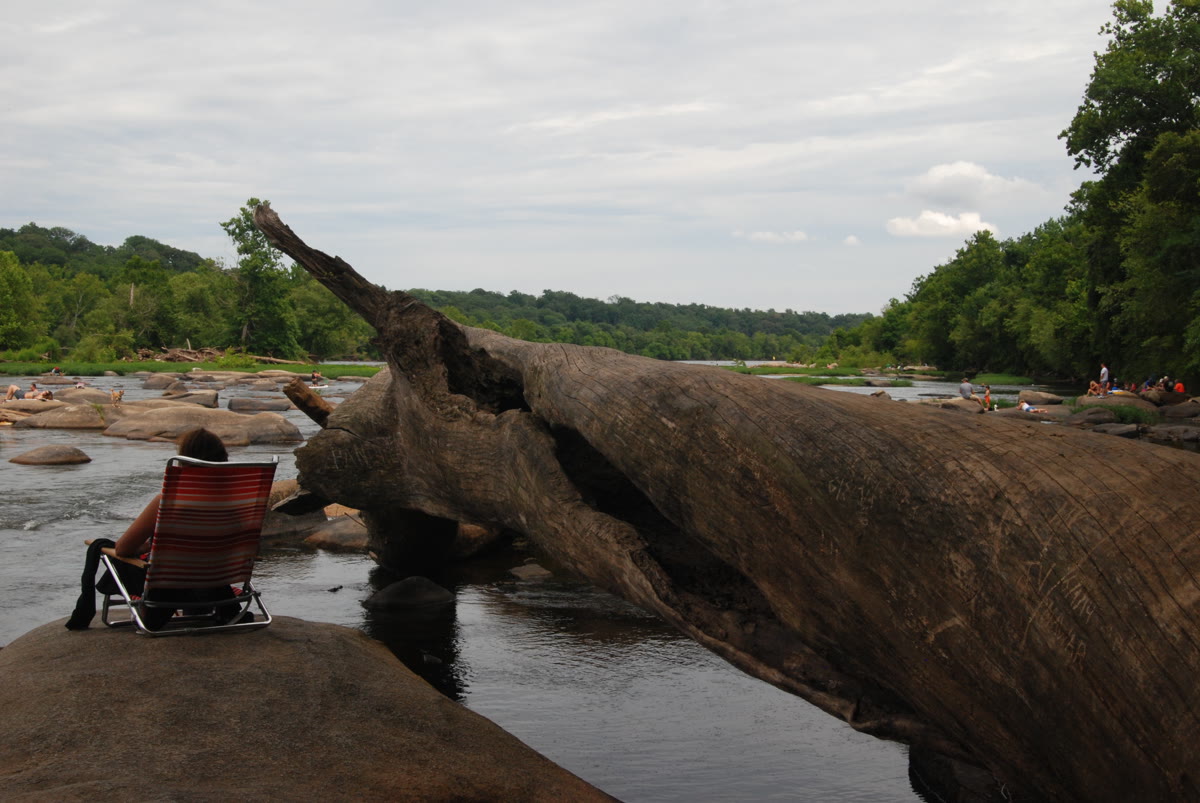
Pony Pasture is what happens when the James River shallows out over a wide shelf of granite rock, creating a stretch of ankle-deep rapids and small pools that dogs can wade through, splash around in, and generally lose their minds over. For Richmond dog owners who’ve been coming here for a summer, it’s not a secret. The parking lot fills by 9am on warm weekends. Everyone knows about Pony Pasture.
What they might not know is how to make the most of it: which section is safest for dogs, what the water looks like after rain, when to arrive, and what to bring. Here’s the full picture.
Location and Getting There
Pony Pasture is located on Riverside Drive in the Westover Hills neighborhood, on the south bank of the James River. The main parking lot entrance is at approximately 7200 Riverside Drive. The lot sits above the river, and a short trail drops down to the water.
Coming from Midlothian Turnpike or Forest Hill Avenue, take Semmes Avenue south and connect to Riverside Drive heading east. From the Fan or downtown, take Cary Street west to Riverside Drive and follow it west along the river. The parking lot will be on your left (north side of Riverside Drive) before you reach Forest Hill Park.
There is no fee for parking. The lot has roughly 40 to 50 spaces, and on summer weekends that sounds like more than it is.
The Parking Reality
Here’s the honest version of the parking situation: if you want a spot on a warm Saturday or Sunday from May through September, arrive before 9am. Not as a suggestion. The lot is genuinely full by mid-morning on most warm weekend days, sometimes earlier when the weather is particularly good or when a holiday weekend falls on a hot stretch.
Overflow options exist but require some patience. Street parking along Riverside Drive fills next. Some people park in the Forest Hill Park lot to the west and walk the connecting trail east to Pony Pasture, adding about 10 to 15 minutes each way. That’s actually a pleasant walk and the trail through the connecting section stays shaded. Pony Pasture is also a popular destination for dog owners from the Westhampton and Byrd Park areas who want river access with swimming.
On weekdays, parking is not an issue. You can arrive mid-morning on a Tuesday in August and find an easy spot. Pony Pasture on a weekday morning is a genuinely different experience than the weekend scene, quieter and easier to manage if you have a dog who gets overwhelmed by crowds.
The Water: What to Expect
The rapids at Pony Pasture aren’t white water. At normal summer levels, the James here is a wide, shallow stretch of rocky riverbed where the water runs fast but shallow, maybe knee-deep on an adult in most places. Dogs wade in from the edges, work their way through the rocks, and find the depth that works for them.
The best dog area is the section immediately accessible from the main trail drop-down to the river, roughly the central stretch of the accessible bank. Here the rocks are broad and flat with multiple entry points to the water, and the depth stays manageable for dogs who aren’t strong swimmers.
To the west, the channel deepens and the current picks up. This is where the kayakers come through and where the James becomes genuinely powerful. Keep your dog out of the main channel current. It looks calm at the surface but moves with force, and dogs who get pulled into the central flow can have trouble getting back to shore.
To the east, the bank has some calmer pool sections that are good for dogs who want to swim rather than wade. The water is deeper there, up to chest height on a medium-size dog, but the current is slower along the bank.
Water Safety
The James River in summer looks benign. It isn’t always. A few things that matter:
After rain, water levels change fast. The James can rise several feet within hours of significant upstream rainfall. A stretch that was ankle-deep the day before your visit can be running three feet higher and moving hard. Check for water advisories from the City of Richmond parks department or look at gauge readings if you have any doubt after recent rain. When in doubt, stay out.
Blue-green algae appears in hot weather. Algae blooms occur in late summer, typically July through September, in slower-moving backwater areas and pools. If the water looks blue-green, has a scummy surface film, or smells like a pond, keep your dog out. Algae toxins can cause vomiting, neurological symptoms, and death in dogs, and symptoms can appear within hours of exposure. This is not a risk to take chances with.
Watch for fatigue. Dogs in moving water tire faster than they do in pools or lakes. A dog who looks fine at the 20-minute mark can get tired quickly. If your dog starts to struggle or looks like they’re working harder than normal to swim, get them to shore and let them rest in the shade.
There are no lifeguards. No rangers, no staff, no one whose job is to watch the water. You’re making the judgment calls about what’s safe for your dog.
The Trail Access
Pony Pasture isn’t just the swimming hole. The trail access from the parking lot connects east and west along the river, giving you a proper walking route if your dog needs distance rather than just a dip.
Heading east from the main access area, the trail connects toward Texas Beach, another James River Park System access point, via about a mile of riverside path. This stretch stays close to the water and has good shade in summer. It’s a flat, easy trail on dirt and packed gravel.
Heading west, the trail eventually connects toward Forest Hill Park and the Buttermilk Trail system. The terrain in this direction involves more elevation change as you move away from the river flat toward the bluffs.
Both directions offer a real trail walk in addition to the river access, which is useful if you have a high-energy dog who needs more than swimming to feel satisfied. Pony Pasture is part of the Richmond trails guide: see the full guide for all James River access points. After trail sections through vegetation, check your dog for ticks; this corridor carries significant exposure from spring through fall. See the tick and flea prevention guide for the post-walk protocol.
What to Bring
Water for your dog. There are no water fountains at Pony Pasture. The James River water is not drinking water for your dog. Bring a bottle and a collapsible bowl, and bring more than you think you’ll need in hot weather.
Poop bags. There are no trash cans at Pony Pasture. Pack out what you bring in and what your dog leaves behind. Leave the area as you found it. This is one of those places where the quality of the experience depends on everyone doing the right thing.
Sun protection for you. The river bank at Pony Pasture is exposed. There’s minimal shade on the bank itself, though the trail connections to the east and west have tree cover. A hat, sunscreen, and water for yourself matter on summer days.
Dry towels for the ride home. If your dog swims, and they will, you’ll want something to absorb the wet before they get in the car. A couple of old beach towels work fine.
Seasonal Notes
May and June are the sweet spot. Water levels are usually good, temperatures are comfortable in the morning hours, and the summer crowds haven’t fully arrived yet. Weekday mornings in June are close to ideal.
July and August are the peak season for crowds and heat. The parking situation is at its worst, the bank gets full quickly, and heat stress is a real consideration for dogs. If you go in midsummer, aim for before 9am, bring plenty of water, and plan to leave before noon. The summer heat safety guide covers the specific risks for dogs on Richmond’s riverfront trails.
September sees the crowds start to thin and the air temperature drop. The water is warmest in September because it retains heat from summer. This is actually a very good month for dog swimming, and the parking situation becomes manageable again on weekday mornings.
October through April is the off-season. The swimming is less appealing for most dogs in cold water, but the trail walk and river views are worth the visit. Water levels can be high in spring, which puts the river bank access underwater at times.
Frequently Asked Questions
Is Pony Pasture good for dogs who aren’t strong swimmers?
Yes, with some management. The shallow rapid sections near the main bank entry are only ankle to knee deep for an adult human, which means smaller dogs can wade without actually swimming. The rocks underfoot are stable and provide grip. Keep your dog in the shallower section near the bank and away from the deeper channel to the west. Dogs who are new to moving water usually figure out their comfort level on their own, but stay close and watch.
What time should I arrive at Pony Pasture to get parking on a summer weekend?
Arrive before 9am to be safe. The lot has approximately 40 to 50 spaces and is commonly full by 10am on warm weekend days from May through September. If you arrive after 10am and the lot is full, Riverside Drive street parking fills next, followed by the Forest Hill Park lot to the west. Allow extra time for the walk in from street or overflow parking.
Are dogs required to be on leash at Pony Pasture?
Yes. Pony Pasture is part of the James River Park System, and leash rules apply throughout. In practice, you will see off-leash dogs at the water’s edge, and enforcement is inconsistent. The rule is leash on. If your dog doesn’t have a solid recall in distracting environments, the leash matters more here than the written rule suggests, because there are other dogs, kids, and current all competing for your dog’s attention at once.
Can I let my dog drink from the James River at Pony Pasture?
It’s not recommended. The James River water quality varies, and during algae bloom periods it can be actively dangerous. Bring fresh water and a bowl for your dog rather than relying on the river. Dogs will inevitably ingest some river water while swimming, which is generally fine, but letting them drink directly from a standing or slow-moving section is worth avoiding.
Is there anything at Pony Pasture besides the swimming area?
The main draw is the river access and rapids, but the trail connections east toward Texas Beach and west toward Forest Hill Park give you a genuine walking route as well. Heading east toward Texas Beach is a flat mile on a shaded riverside trail that most dogs and owners find satisfying. The area around the parking lot has a small grassy section and some picnic tables, though there’s no playground equipment, no dog park, and no food service. It’s a park, not a destination facility.