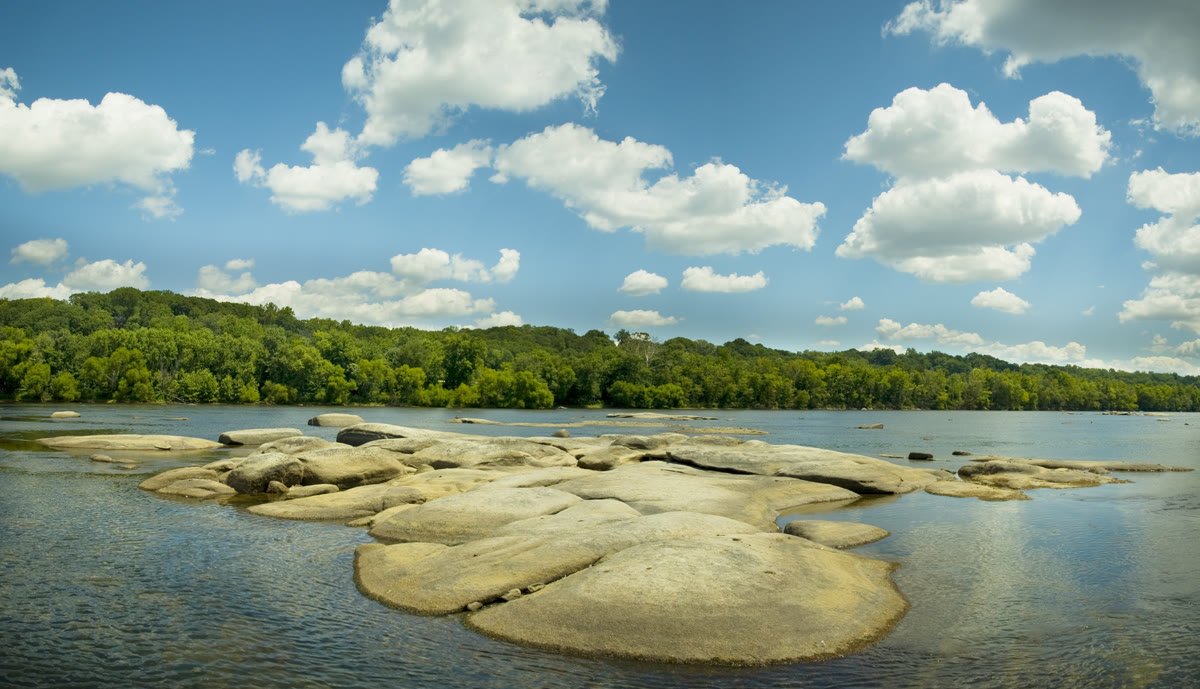
The James River Park System is 550 acres of parkland running along both banks of the James River through the middle of Richmond. For dog owners in this city, it’s the most important piece of public land you’ll ever use. Trails, river beaches, granite boulders, wooded bluffs, and a half-dozen distinct destinations, all connected by the river and all within city limits.
This isn’t one trail you walk end to end. It’s a network with multiple entry points, each with its own character. Pony Pasture is where you take a dog who needs to get wet. Belle Isle is the island loop with rock scrambles and crowd management issues on weekends. Texas Beach and Reedy Creek are quieter stretches for people who want the river without the parking lot scene. The North Bank and Buttermilk trails are for dogs who need serious mileage.
Dogs are required on leash on all James River Park System trails. That rule is enforced with variable seriousness depending on the location and time of day, but it’s the rule.
Access Points and What to Expect at Each
Belle Isle is reached by pedestrian bridge off Tredegar Street, south of downtown. Parking is in the lot on Tredegar (free, limited), and the bridge puts you on a 54-acre island with a perimeter loop trail and granite boulders on the south side. It’s the most popular access point in the system and the most crowded. Weekday mornings and fall weekdays give you a completely different experience than a summer Saturday afternoon.
Pony Pasture sits at approximately 7200 Riverside Drive in Westover Hills. The parking lot here fills early on warm weekends, often by 9am in summer. The draw is the shallow rocky rapids where dogs can wade and swim. There are no trash cans and no water fountains, so pack in what you need. The trail from the parking area connects along the river and links to Texas Beach via about a mile of riverside path.
Texas Beach is accessible from Riverside Drive around 4300, with a small pull-off parking area. It’s quieter than Pony Pasture, with river access and a short trail section that follows the bank. Good option when Pony Pasture is at capacity.
Reedy Creek at the west end of the system, accessible off Riverside Drive near Route 288, has a longer walking trail that winds through bottomland forest before reaching the river. Less crowded than the central access points and good for a proper woodland trail walk.
The North Bank Trail runs along the north bank of the James, accessed from parking near the Boulevard Bridge. This is a technical mountain biking trail that’s also open to hikers and dogs. It’s one of the best stretches for a dog who needs real terrain, with rocky singletrack, river views, and minimal crowds on weekday mornings.
Pipeline and Riverside Drive overlooks give you quick access to river views without committing to a longer hike. Useful when you have 30 minutes and a dog who just needs to move.
Trail Surfaces and Difficulty
The system has a range of surfaces. The Belle Isle loop is mostly packed gravel and flat, appropriate for any fitness level. The North Bank Trail is rocky singletrack with roots and short climbs, better suited to dogs and owners who are comfortable on technical terrain. Riverside trails near Pony Pasture and Texas Beach are packed dirt with some rocky sections near the water.
Trail conditions change significantly with rain. The James River floods its banks regularly, especially in spring. After heavy rain, lower river trails and beach access points can be underwater or extremely muddy for 24 to 72 hours. Check conditions before heading out after significant rainfall. The trails themselves drain reasonably well, but the river access points at ground level stay slippery long after the water recedes.
Seasonal Differences
Spring brings flooding risk, high water levels, and the best wildflower displays in the wooded sections. Water in the James runs fast and cold after winter snow melt and spring rains. Keep dogs out of the main current from roughly February through April unless water levels are clearly low.
Summer means heat and crowds. The James River beach and swimming spots are at peak use from Memorial Day through Labor Day. Parking lots fill fast. Go early, bring water for your dog, and monitor for heat stress, especially on dogs with short muzzles or heavy coats. The trails have limited shade near the water; more shade in the wooded bluff sections.
Fall is the best season in the park system. Temperatures drop, crowds thin, the trail surfaces dry out, and the foliage along the wooded sections turns. October and November are the prime months. You can access parking lots that are otherwise full in summer and walk the river at a pace that feels like the park is yours.
Winter is peaceful and often ignored by visitors. The trails stay accessible except during ice events. Shorter days mean earlier departures if you want daylight for river access, but the off-season crowds are minimal and your dog will appreciate the cooler temperatures.
Water Safety in the James River
The James River looks deceptively calm in many spots, especially at low water in late summer. The current is real. Dogs who are not strong swimmers should stay in the shallow rapid areas near shore, not in the main channel. After any significant rainfall, water levels and current speed can increase dramatically within hours.
At Pony Pasture, the shallow rocky section near the parking area is the safest swimming spot. Further west along the bank, the channel deepens and the current picks up. Most dogs figure out their own comfort level in moving water, but watch for signs of fatigue, especially in smaller breeds or older dogs.
Blue-green algae can appear in calmer backwater areas during hot weather, typically July and August. If the water looks blue-green or has a surface bloom, keep your dog out. Algae toxins are serious and act fast.
Leash Requirements
All James River Park System trails require dogs on leash. There are no designated off-leash areas within the system itself, though the informal practice at water access points often looks different from the written rule.
If your dog needs off-leash time, the off-leash dog parks in Richmond , including Barker Field at Byrd Park and the fenced area at Bryan Park, provide dedicated space. The James River trails are not that.
Parking Notes
Most James River Park access points have free parking. Belle Isle’s Tredegar lot fills fastest on weekends. Pony Pasture’s lot on Riverside Drive has perhaps 40 spaces and is routinely full by mid-morning on summer weekends. Texas Beach and Reedy Creek have smaller pull-off areas with less demand. North Bank Trail parking near the Boulevard Bridge has moderate capacity and generally more availability than the prime river beach spots.
Getting the Most Out of the System
The James River Park System rewards people who explore past the obvious entry points. Belle Isle and Pony Pasture get the attention, but the Buttermilk Trail, Reedy Creek, and the quieter Riverside Drive access points give you the same river and a fraction of the crowd. Rotate your routes, note which lots are full when you arrive, and adjust. A dog walk in this system on a Tuesday morning in October is one of the better things Richmond has to offer. Before hot-weather visits, review the summer heat safety guide. After any wooded section, do a thorough tick check . See the tick and flea prevention guide for what to look for and how to remove. The full Richmond trails guide covers every destination in the system and beyond.
Frequently Asked Questions
Are dogs allowed off-leash anywhere in the James River Park System?
No. The James River Park System requires dogs on leash on all trails and in all areas. The only off-leash options in Richmond are designated fenced dog parks, including Barker Field at Byrd Park and the dog park area within Bryan Park. Informal off-leash use happens near the river, but it’s not officially permitted and puts you at risk of a citation.
Where should I park to access the James River Park System?
The most popular option is the Tredegar Street parking lot for Belle Isle, located at the end of Tredegar Street south of downtown. Pony Pasture has a small lot on Riverside Drive around 7200. Texas Beach has roadside pull-off parking near 4300 Riverside Drive. Reedy Creek is accessible from Riverside Drive near the Route 288 intersection. All lots are free.
Is the James River safe for dogs to swim in?
The shallow rocky sections at spots like Pony Pasture are generally safe for dog wading and swimming during normal water levels. Avoid the main channel current, especially after rain when water levels rise quickly. Stay out of water that appears blue-green or has visible surface algae, which can carry toxins harmful to dogs. Check for trail and water advisories on the James River Park System’s social media or the City of Richmond parks page before visiting after heavy rain.
How muddy do the James River Park trails get after rain?
Trail conditions after rain vary by location. The wooded upland trails drain reasonably well and are usually passable within 24 hours of moderate rain. The river beach access points at low elevation, including parts of Pony Pasture and Texas Beach, can stay flooded or extremely muddy for 48 to 72 hours after significant rainfall. Spring rains can keep river beaches inaccessible for multiple days during high water events.
What’s the best time of year to visit the James River Park System with a dog?
October through early November is the best window: comfortable temperatures, dry trail conditions, fall color, and significantly smaller crowds than spring or summer. Early morning visits from May through September give you the second-best experience, with cooler air and access to parking before the lots fill. Avoid summer weekend afternoons at Belle Isle and Pony Pasture if crowds or heat are a concern.