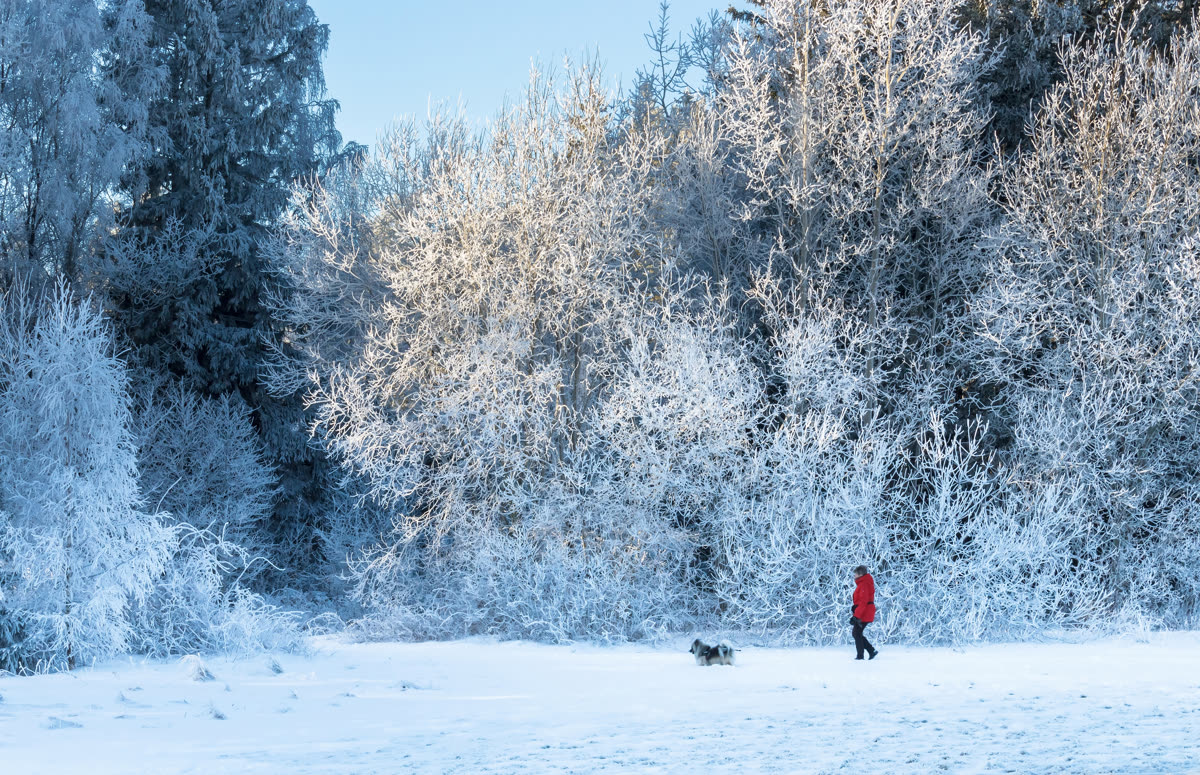
Richmond’s winters don’t get enough credit for being genuinely difficult to dress for. The city sits at the edge of two climate zones: warm enough that serious winter gear feels excessive, cold enough that ignoring the weather is a mistake. Temperatures swing from the mid-50s to the low 20s in a single week, freezing rain arrives with less warning than a proper snowstorm, and the city applies road salt generously even for minor ice events because the infrastructure isn’t built for snow removal.
For dog owners, this means the challenges aren’t the same as up north (sustained cold, deep snow, weeks of subzero conditions) but they’re real. Ice and salt on sidewalks is the biggest practical issue. Reduced daylight is the second. And cold sensitivity for small or short-coated dogs is worth understanding before you find out about it the hard way.
What Richmond Winters Actually Look Like
Average Richmond winter temperatures run between the low 30s and the low 50s from December through February. The coldest weeks of the year typically fall in January, when overnight lows occasionally drop into the teens and highs stay below freezing for a few days at a time.
What makes Richmond winters tricky is the variability. You might have three days of 55°F weather followed by an ice storm followed by another mild stretch. The ground freezes and thaws repeatedly rather than staying consistently frozen. This freeze-thaw cycle is what creates the slick sidewalk conditions that are harder to manage than deep snow, because they’re unpredictable and change hour by hour.
Snowfall is modest. Richmond averages 7 to 12 inches of snow per year, usually concentrated in January and February, but it often comes as ice rather than clean snow and disrupts the city significantly when it does arrive.
Ice, Salt, and Paw Protection
Road salt is the main hazard to your dog’s paws in Richmond winter. The city and property owners use salt and deicing chemicals on sidewalks after any ice event, and those chemicals stay on the pavement well after the ice melts. They crack paw pads with repeated exposure and are toxic if ingested, which happens when a dog licks their paws after a salted walk.
Rinse your dog’s paws after every winter walk on salted streets. This is the minimum. Warm water and a cloth or a small foot bath at the door takes 30 seconds and prevents the salt from sitting on the pads or getting licked off. For dogs with sensitive paws, paw balm or wax (Musher’s Secret is the most widely used product) applied before the walk creates a barrier that reduces salt absorption and helps with cracking.
Booties are the more complete solution and also the most contested one. Some dogs accept them immediately; some never do. If you want to try booties, the process of getting a dog comfortable with them takes several sessions of positive reinforcement before the first actual walk. Slapping them on a dog who’s never worn them and immediately heading out usually results in a dog doing the high-stepping panic walk and refusing to move.
For most Richmond winters, paw balm plus a post-walk rinse is sufficient for the salt problem. Booties become more worth the effort if your dog has existing paw pad sensitivity or if you’re regularly walking on heavily salted commercial sidewalks.
Ice itself is a separate concern. Slick surfaces are a fall hazard for both you and your dog, and older dogs or dogs with joint issues are particularly at risk. Adjusting your route to avoid known icy sections (shade-side sidewalks, areas under dripping trees, intersections where water pools) is easier than managing a fall.
Shorter Days and Visibility
Sunset in Richmond in December and January falls between 4:45pm and 5:00pm. That means evening walks happen in the dark for most of December through February if you’re working a standard daytime schedule. Richmond streets vary significantly in how well-lit they are for pedestrians.
Reflective gear for you and your dog is not optional for evening winter walks. A reflective vest for your dog, a clip-on blinky light for the leash, and some visible layer for yourself (even a reflective armband) makes a real difference on streets where drivers aren’t expecting pedestrians in the dark at 5pm. Well-canopied neighborhoods like The Fan and Northside often have better ambient light and more shelter from wind than newer development areas.
Keep your dog close on unlit walks. A 6-foot fixed leash gives you control; a retractable leash in the dark on slippery sidewalks is asking for a problem.
Lights that clip to a collar are inexpensive and widely available. The ones that use standard coin batteries last long enough to be practical and are worth keeping charged through winter.
Cold Sensitivity: Which Dogs Feel It Most
Healthy adult dogs in full coat handle Richmond’s winters without any additional protection for most temperature ranges. A Labrador, German Shepherd, or Husky-mix in good health is fine in 25°F weather for a normal walk. They’ve got the insulation.
The dogs who need more consideration:
Small dogs. Size matters for cold tolerance because smaller dogs have more surface area relative to their body mass and lose heat faster. A 10-pound dog in 25°F weather is in a meaningfully different situation than a 60-pound dog. Dog coats or sweaters are not silly fashion accessories for small dogs in Richmond winters; they’re functional.
Short-coated dogs. Greyhounds, Whippets, Boxers, Dobermans, Pit Bull Terriers, and similar breeds have very little insulating coat. They get cold faster than their size might suggest and benefit from a coat or sweater below about 40°F. Greyhounds in particular are notorious for being miserable in cold weather despite their athletic appearance.
Senior dogs and dogs with joint problems. Cold stiffens joints. Older dogs who show signs of arthritis often move worse in cold weather and need shorter, more frequent walks rather than one long outing. A coat helps retain body heat, which helps with joint comfort.
Puppies. Young dogs haven’t developed full thermoregulation and shouldn’t be out in genuinely cold conditions for long. Shorter walks more frequently, and watch for shivering as a clear signal to go back inside.
When to Skip the Walk
Richmond winters rarely warrant skipping walks entirely for healthy adult dogs, but a few situations call for it.
Active freezing rain is genuinely dangerous for both you and your dog. The fall risk on icy pavement outweighs the exercise benefit. A short trip outside for bathroom purposes, then back in, is the right call. For a complete winter gear checklist, see the what to bring guide. This guide is part of the Richmond dog walking tips collection.
Temperatures below 20°F with wind chill factor are the threshold where most veterinary guidance suggests limiting outdoor time. Above 20°F, most healthy adult dogs in coats handle Richmond conditions fine for normal walks. Below 20°F, keep walks short and purposeful.
Watch your dog for signals: lifting paws off the ground (too cold on the pads), shivering, or reluctance to move forward are all signs it’s time to go back in.
Frequently Asked Questions
How cold is too cold to walk a dog in Richmond? For healthy adult dogs with full coats, below 20°F with wind is the general threshold for limiting walks. Small dogs, short-coated breeds, seniors, and puppies feel it at higher temperatures, around 40°F. Watch your dog for signs: paw lifting, shivering, and reluctance to move forward all mean it’s time to head inside.
Does road salt hurt dogs’ paws? Yes. Salt and deicing chemicals dry out and crack paw pads with repeated exposure, and they’re mildly toxic if ingested when dogs lick their paws after a walk. Rinse paws with warm water after every winter walk on salted streets. Paw balm applied before walks reduces absorption.
Do dogs need coats in Richmond winters? Most medium and large dogs with full coats don’t need a coat in typical Richmond winter weather. Short-coated breeds (Greyhounds, Boxers, Pit Bulls), small dogs under 15 pounds, senior dogs, and puppies benefit from a coat in temperatures below 40°F. If your dog is shivering on walks, that’s your answer.
What should I do about visibility on dark winter walks? Use reflective gear: a reflective or light-colored vest for your dog and something visible for yourself. Clip-on LED lights for collars and leashes are inexpensive and effective. Keep your dog on a short fixed leash rather than a retractable in the dark. Stick to well-lit routes when possible.
Are there good indoor alternatives to walks in bad Richmond winter weather? Yes. Mental enrichment can tire a dog out almost as effectively as physical exercise. Puzzle feeders, training sessions, and nose work games are all options. Many Richmond dogs are fine with a day or two of reduced outdoor time when conditions are genuinely dangerous, as long as they get indoor mental stimulation.