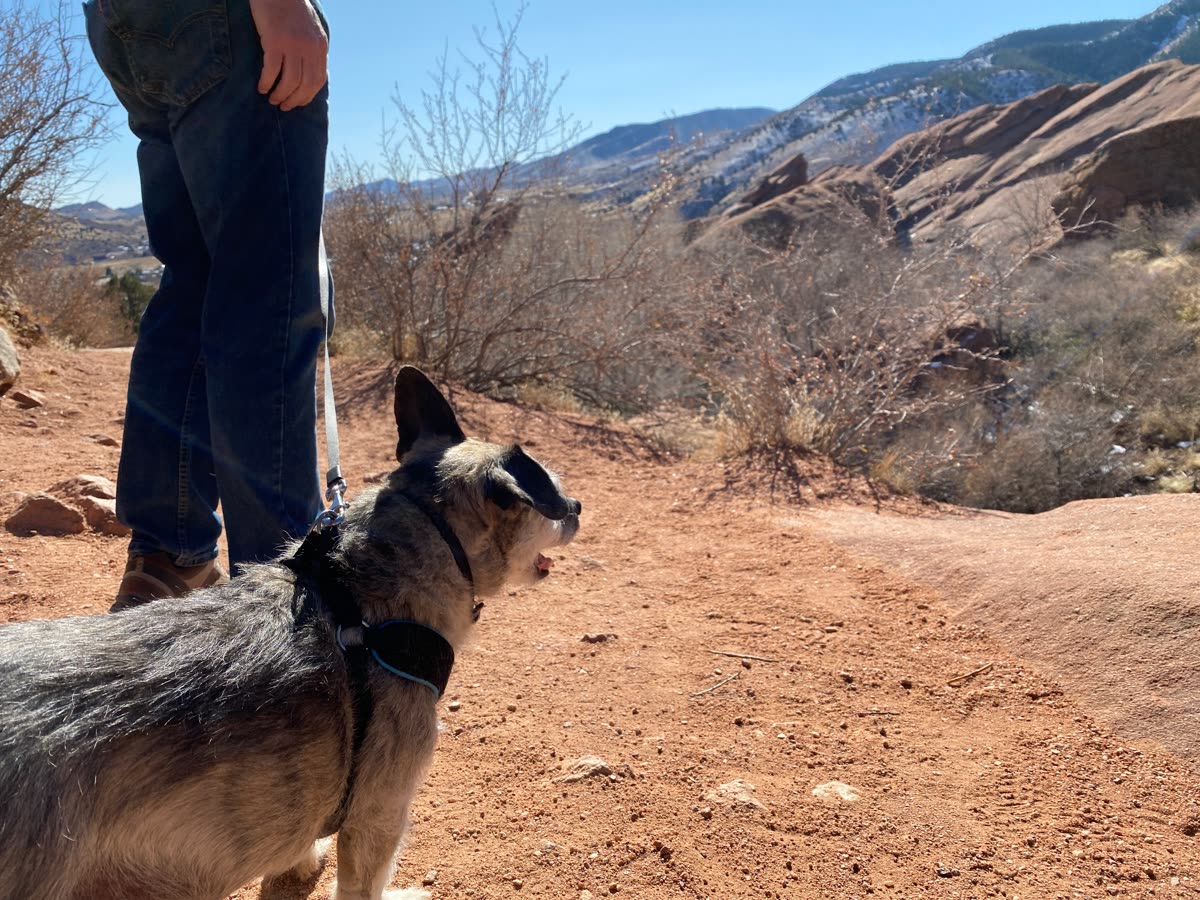
The most common mistake new dog owners make with leash walking is treating it like something that should come naturally. It doesn’t. Walking nicely on a leash is a skill dogs have to learn, and unlike sitting or lying down, it has to hold up under constant distraction: squirrels, other dogs, interesting smells, children running, cyclists, everything. Expecting a dog to just figure it out is how people end up being dragged down the sidewalk for years.
The good news is that loose-leash walking is one of the most teachable things you can work on with your dog. It takes consistency and some patience with the process, but it’s not complicated once you understand what you’re actually teaching.
The Equipment Question
The harness versus collar debate has a clear answer for loose-leash walking purposes: most dogs do better starting with a harness than a flat collar.
Here’s why. A flat collar puts pressure on a dog’s neck and throat when they pull. Dogs have a natural reflex called opposition reflex: when pressure is applied, they press back against it. This means a flat collar actively reinforces pulling. The dog pulls, the collar puts pressure on the neck, the dog presses harder into that pressure and pulls harder. This is not the dog being stubborn. It’s physiology.
A front-clip harness (one where the leash attaches to a ring on the chest, not the back) changes the mechanics. When the dog pulls, the harness rotates their body back toward you instead of letting them continue forward. It doesn’t hurt them; it just removes the mechanical advantage that makes pulling effective.
Back-clip harnesses, the kind where the leash attaches between the shoulder blades, are comfortable but don’t help with pulling. They’re fine for dogs who already walk nicely. For teaching a dog to stop pulling, a front-clip harness is the tool worth starting with.
Head halters (like the Gentle Leader) work well for some dogs and are a complete disaster for others. Some dogs accept them quickly; others spend entire walks rubbing their face on the ground trying to remove it. If you try one and your dog spends more time fighting the halter than walking, it’s not the right tool for your dog.
Retractable leashes are not a training tool. They teach the dog that the length of leash is variable and that pulling gets them more range. For any dog you’re actively teaching to walk on leash, use a standard 4-to-6 foot fixed-length leash. A 6-foot leash gives the dog room to sniff and move without giving them enough slack to get into trouble.
Loose-Leash Walking Technique
The fundamental idea in loose-leash walking is simple: forward movement is a reward, and pulling does not get the dog where they want to go. You teach this by stopping the moment the leash goes tight and only moving forward when it’s loose again.
The mechanics:
Start walking. The moment your dog gets to the end of the leash and it goes tight, stop walking. Stand still. Wait. Don’t pull back, don’t yell, don’t make a scene. Just stop. Most dogs, after a few seconds of standing and not going anywhere, will turn to look at you or take a step back to relieve the pressure. The instant the leash goes slack, start walking again.
That’s the core loop. The dog learns: tight leash means we stop. Loose leash means we keep moving. Moving forward is what they want. They control whether it happens.
This feels painfully slow at first. A 20-minute walk can feel like it’s going to take an hour when you’re stopping every 10 yards. It gets faster. Within a few sessions, most dogs start to understand what controls the walk.
The second piece is rewarding position. When your dog is walking next to you with a loose leash, tell them so. Verbal praise, a treat, whatever currency works for your dog. Most owners are very consistent about reacting when the dog does something wrong and completely silent when the dog is doing exactly what they want. That silence is a missed training opportunity. When the leash is loose and your dog is in a good position, mark it.
A clicker can help here because the timing is precise: the click marks the exact moment the dog is in position, before they’ve moved away from it. If you’re not using a clicker, a short verbal marker like “yes” works the same way.
Teaching a Change of Direction
One useful tool for leash walking is the direction change. When your dog surges ahead and you’d normally be stopping and waiting, instead you turn and walk the other way without announcement. Your dog, suddenly going the wrong direction, has to turn and catch up with you. When they catch up, the leash is loose again. Mark it, reward it, keep walking.
Direction changes accomplish two things. They keep the dog paying attention to where you are, because stopping paying attention means getting left behind. And they break the forward momentum that makes pulling feel productive to the dog.
Don’t do this with a hard yank. The turn should feel natural, like you suddenly decided to go a different way, not like a correction. Over time, your dog learns to keep an eye on you because you’re unpredictable in a way they find interesting rather than threatening.
Common Mistakes That Undermine Progress
Letting pulling work sometimes. If the leash goes tight and you stop 80% of the time but sometimes keep walking because you’re in a hurry, you’ve just taught the dog that pulling sometimes works. That makes the behavior much harder to extinguish than if you’d never been consistent. This is not a criticism. It’s genuinely hard to be consistent when you’re running late. But understanding that inconsistency extends the training timeline by a lot is useful information.
Using the leash as a correction tool. Jerking or popping the leash when the dog pulls is an old training approach that tends to make loose-leash walking harder, not easier. It creates tension around the walk, can cause dogs to become more reactive (pain and frustration on walks is a significant contributor to leash reactivity), and doesn’t teach the dog what to do. It only briefly punishes what you don’t want. Teaching what you do want is more effective. If your dog has already developed reactivity, see the reactive dog walking guide. This guide is part of the Richmond dog walking tips collection.
Training only on familiar routes. Dogs don’t generalize well. A dog who walks beautifully on your street will pull like it’s their first day on leash when you take them somewhere new and interesting. Practice loose-leash walking on new routes, in new environments, around new distractions: try the trails in the Richmond trails guide as progressively more challenging environments. It’s harder in unfamiliar places; that’s the point. Build the skill where it matters.
Expecting too much too fast. Puppies have short attention spans and enormous enthusiasm for the world. An 8-week-old puppy cannot walk on a loose leash for 20 minutes. Neither can a newly adopted adult dog who’s overwhelmed by their new environment. Set training sessions to match what your dog can actually handle: short, successful sessions beat long frustrating ones every time.
When the Basics Aren’t Enough
If your dog is very large, very strong, or has developed a serious pulling habit over years, the basics may not make fast progress without professional help. A trainer who uses positive reinforcement methods can watch your specific dog on leash and tell you what’s actually happening much faster than you can figure it out on your own. If you’re in Richmond and this is where you are, it’s worth the investment.
Frequently Asked Questions
Is a harness or collar better for leash training? For teaching a dog to stop pulling, a front-clip harness is generally more effective than a flat collar. The front-clip attachment changes the mechanics when a dog pulls, rotating them back toward you rather than letting them continue forward. Flat collars work fine for dogs who already walk nicely but can reinforce pulling due to the opposition reflex.
How long does it take to teach a dog to walk on a loose leash? It depends on the dog’s age, history, and how consistent the training is. Puppies with no bad habits can learn the basics in a few weeks of daily practice. Adult dogs with years of pulling behavior may take months. Consistency is the biggest factor: stopping every time the leash goes tight, without exceptions.
Can an older dog learn to walk on a loose leash? Yes. The old saying about old dogs and new tricks is largely inaccurate. Adult dogs often learn loose-leash walking faster than puppies because they have better attention spans and less overwhelming enthusiasm for everything they see. The work is the same; the timeline is often similar.
What should I do when my dog won’t stop pulling no matter what I try? First, check your equipment. If you’re using a back-clip harness or a retractable leash, switch to a front-clip harness and a fixed 6-foot leash. Second, make sure the treats you’re using are actually high-value to your dog in distracting environments. Regular kibble often doesn’t cut it on a stimulating walk. Third, if you’ve been consistent for a month or more with good equipment and high-value treats and aren’t seeing progress, a trainer who specializes in loose-leash walking can diagnose what’s getting in the way.
How long should I walk my dog each day? It varies by breed, age, and individual energy level. A general starting point for adult dogs is 30 to 60 minutes of walking per day, split into two sessions. High-energy breeds may need significantly more. Puppies need shorter, more frequent outings: 5 minutes of walking per month of age is a rough guideline to avoid overworking developing joints. Senior dogs often need shorter but still regular walks to maintain mobility.