July in Richmond is not a good month to figure out your dog’s heat limits. The combination of high humidity and sustained heat makes central Virginia one of the tougher places in the country to walk a dog between June and September. The air temperature gets your attention. The pavement temperature is the one that actually hurts your dog.
Here’s what I’ve learned after too many summers of getting this wrong before I got it right.
Why Richmond Summers Are Hard on Dogs
Richmond sits in a humid subtropical climate. What that means in practice is that even when the thermometer reads 88°F, the heat index regularly pushes above 100°F from June through August. Dogs cool themselves almost entirely through panting. Panting works by evaporating moisture from the lungs and airways, but when the air is already saturated with humidity, evaporation slows down and panting loses most of its cooling power.
That’s the core problem. A dog in Phoenix at 95°F with low humidity is in a genuinely different situation than a dog in Richmond at 88°F with 85% humidity. The Richmond dog is working much harder to stay cool, even at a lower air temperature.
Add asphalt into the picture and it gets worse. Dark pavement in direct sun can reach 140°F to 160°F in Richmond summer conditions. Dog paws have some protection, but not enough to walk on pavement at those temperatures without burning.
The Pavement Test
Before you take your dog out between 9am and 7pm in Richmond summer, do this: press the back of your hand flat against the pavement and hold it there for seven seconds. If you can’t keep it there, your dog shouldn’t be walking on it.
The seven-second test works because the back of your hand is close to the sensitivity level of a dog’s paw pads. If it’s uncomfortable for you after seven seconds, it’s actively damaging for your dog with every step.
On a 90°F day with full sun, most Richmond pavement fails this test by mid-morning and stays too hot until well into the evening. On overcast days or after rain, it cools faster and you have more flexibility.
When It’s Too Hot to Walk
There’s no single air temperature that applies to every dog. A young Labrador in good health handles heat better than a flat-faced French Bulldog, a senior dog, or any dog carrying extra weight. That said, some rough thresholds are worth knowing.
When air temperature is above 90°F and humidity is high, most dogs are at real risk during a walk of more than 15 minutes. When the heat index exceeds 103°F, even short walks can tip into dangerous territory for vulnerable dogs. Brachycephalic breeds (bulldogs, pugs, boxers, French bulldogs) should not be walked outside at all during the hottest part of Richmond summer days. They cannot cool themselves efficiently even under normal conditions, and heat stress comes on fast.
If you’re unsure whether it’s too hot, err toward staying in. A missed walk is much easier to recover from than heat stroke.
The Best Times to Walk in Richmond Summer
The windows that actually work in Richmond summer are early morning and evening.
Before 8am is the golden window. Pavement retains heat overnight but starts from a lower baseline than it will reach by midday, and the air temperature is at its daily low. In June and July in Richmond, this means walking between 6am and 7:30am is usually fine for most dogs. Get out early enough and you get the bonus of cooler pavement, lower humidity, and significantly less traffic on most routes.
Evening after 7pm is the second option, but it requires more patience. Pavement holds heat for hours after the sun drops. The 7pm rule is a rough guide: the actual safe time depends on how hot the day was, whether there’s cloud cover, and how much direct sun the specific route gets. When in doubt, run the pavement test again. A route in the shade of the Fan’s tree canopy cools faster than open asphalt in the Museum District.
Shaded Routes Worth Using
The Fan is one of the better options for summer walks in Richmond because of the mature tree canopy over Monument Avenue and the residential streets running east-west. The trees don’t just provide shade for walkers; they significantly lower pavement temperature on streets with consistent cover. Streets like Grove Avenue, Floyd Avenue, and the blocks immediately north of Monument Avenue have decent shade density.
Byrd Park is the other strong option. The lake loop and the interior paths under the tree canopy stay meaningfully cooler than exposed pavement, and the grass allows your dog to walk off the hot surfaces when needed. Early morning at Byrd Park in summer is one of the better dog walking experiences the city offers.
Forest Hill Park and the wooded sections of the James River Park System offer shade too, but the trail surfaces vary. Dirt and mulch trails stay much cooler than paved paths, so routing through unpaved sections when possible helps considerably. See the what to bring guide for hydration gear recommendations. This guide is part of the Richmond dog walking tips collection.
Avoid routes through open commercial areas, parking lots, or any stretch with significant south-facing pavement exposure during summer afternoons.
Hydration on Summer Walks
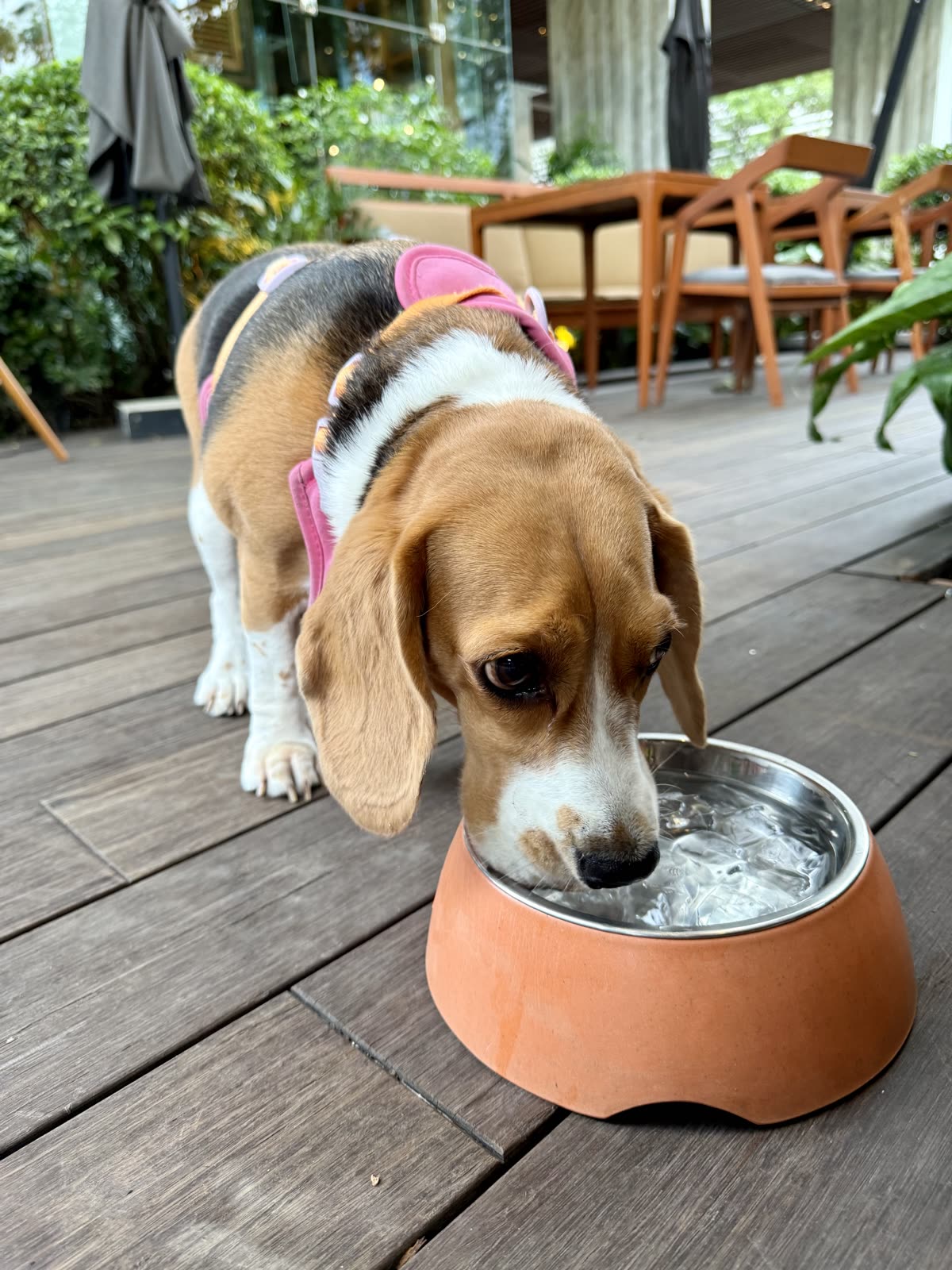
Bring water for every summer walk, even a short one. A folding silicone bowl takes up almost no space and makes the difference between a dog who stays hydrated and one who doesn’t drink because you’re offering water from cupped hands that they can’t drink efficiently.
How much water your dog needs on a walk depends on their size and the conditions, but a general starting point is about an ounce of water per pound of body weight per day. In summer walking conditions, they’ll need more than their baseline. Offer water every 15 to 20 minutes on hot walks, not just when they seem thirsty. Dogs don’t always signal thirst clearly until they’re already in deficit.
Cold water is slightly better than room temperature water. Carrying a small insulated bottle keeps it cooler longer.
Signs of Heat Stroke in Dogs
Heat stroke is a genuine emergency. Knowing the signs early is the difference between catching it while intervention is still easy and ending up at an emergency vet.
Early signs include heavy, labored panting that sounds different from normal exertion panting (louder, more desperate), excessive drooling, and a dog who suddenly seems dull or less interested in moving forward on the walk. Watch for gums that look redder than normal or, at later stages, pale or greyish.
As heat stroke progresses, you’ll see unsteadiness, weakness in the rear legs, and potentially vomiting or collapse. A dog’s normal body temperature is around 101°F to 102.5°F. Heat stroke begins above 104°F and becomes life-threatening above 107°F. You cannot take a dog’s temperature on a walk, so you’re working from behavioral and visible signs.
If your dog shows any of the later signs, get them into shade or air conditioning immediately, offer small amounts of cool (not ice cold) water, and apply cool wet cloths to the neck, armpits, and groin area. Call your vet or emergency vet while doing this. Do not wait to see if they improve on their own.
The best version of this situation is one where you never get to the intervention stage because you went out before 8am.
Frequently Asked Questions
How hot is too hot to walk a dog in Richmond? When air temperature is above 90°F with high humidity, most dogs should only go out in the early morning (before 8am) or evening (after 7pm). Do the seven-second pavement test: press your hand flat on the asphalt for seven seconds. If you can’t hold it there, the pavement is too hot for your dog’s paws.
What are the signs of heat stroke in dogs? Early signs include heavy labored panting, excessive drooling, and sudden dullness or reluctance to walk. More serious signs include unsteady walking, weakness, vomiting, and pale or grey gums. Heat stroke is a veterinary emergency. Get your dog into a cool space and contact your vet immediately.
Is it better to walk my dog in the morning or evening in summer? Morning before 8am is better in Richmond summers. Pavement is cooler after overnight temperatures drop, humidity is at its daily low, and the sun hasn’t had time to superheat surfaces. Evening walks work too, but pavement holds heat for hours after sunset, so check it before going out.
What Richmond parks are good for summer dog walks? Byrd Park’s wooded interior paths and the shaded streets of the Fan neighborhood are the most reliable summer options. The James River Park trails with unpaved surfaces (dirt and mulch) stay cooler than asphalt. Avoid open, paved, and sun-exposed routes from about 9am to 7pm.
Can dogs get sunburned? Yes. Dogs with thin coats, light-colored fur, or pink skin (common on the nose and ears) can sunburn. This is a secondary concern to heat and pavement temperature, but worth knowing. Short-snouted and light-coated dogs are more vulnerable. Shade is your best protection for dogs, as pet-safe sunscreens are available but tricky to apply consistently.