Forest Hill Park doesn’t get the attention that Belle Isle or Pony Pasture pulls, and that’s precisely what makes it good. It’s part of the Richmond trails guide, which covers the full city trail network. The wooded sections carry real tick exposure from spring through fall: see the tick and flea prevention guide before heading in. Dog owners from Westhampton and the surrounding south-of-the-river neighborhoods use Forest Hill regularly as their closest wooded trail option. The 80-acre park sits on College Avenue in South Side Richmond, an easy drive from Forest Hill, Westover Hills, Stratford Hills, and Manchester, and it stays quieter than the riverfront access points even on warm weekend afternoons.
The park has wooded loop trails, open grass fields, a 1930s stone shelter that serves as the visual anchor of the space, and a connection to the Buttermilk Trail system for anyone who wants to extend the walk toward the James River. Dogs are allowed throughout the park on leash, and the combination of trail variety and lower foot traffic makes Forest Hill one of the better mid-week dog walk destinations on the south side of the city.
Location and Parking
Forest Hill Park is located at approximately 4000 College Avenue in the Forest Hill neighborhood, south of the James River. The main parking lot is accessible from College Avenue and provides free parking with reasonable capacity. On most days outside of special events, finding a spot is not a problem.
The park is also accessible on foot from the surrounding residential neighborhoods, and dog owners from Westover Hills, Stratford Hills, and the Forest Hill neighborhood itself often walk in directly rather than driving. If you’re coming from North Richmond or the Fan, plan on 15 to 20 minutes by car across the river.
The area around the park has street parking on College Avenue and the adjacent residential streets as overflow when the main lot is full, though that’s uncommon outside of organized events.
The Trail System
The wooded trails at Forest Hill Park are the main reason to come with a dog. The paths wind through mixed forest of mature oaks and other hardwoods, with enough canopy to provide shade in summer and a genuine tree tunnel feel that’s different from the open river bank experience.
Trail surfaces are a mix of dirt and packed gravel. The terrain has moderate undulation, not flat like a paved path but not demanding in the way that technical mountain bike trails are. The trail system is well-maintained and generally clear even after rain, draining better than many Richmond parks because of the underlying topography.
The main loop through the wooded section takes roughly 45 minutes to an hour at a comfortable dog-walking pace with stops. Longer routes can be constructed by combining the wooded section with the park’s connector trails, adding the open field areas, or extending out to the Buttermilk Trail connection.
The Historic Stone Shelter
The stone shelter in Forest Hill Park is a Depression-era structure built by the Works Progress Administration in the 1930s. It sits in the central area of the park and is one of the more distinctive landmarks in Richmond’s park system: a low stone building with an open timber roof structure, providing shade and a place to sit regardless of weather.
It serves as a natural waypoint on a walk through the park. Most dogs will want to investigate the perimeter, and the stone walls provide a good backdrop for photos if that’s your interest. The shelter area has picnic tables and is sometimes used for small outdoor gatherings.
Beyond its practical function, the shelter gives Forest Hill Park a character that newer parks don’t have. It’s worth taking a few minutes here rather than walking past it.
Open Fields and Lawn Areas
Forest Hill Park has several open grass sections that provide a contrast to the wooded trails. The fields give dogs a chance to stretch out at a run (on leash), let owners see them clearly in the open, and provide the kind of open-air freedom that’s different from trail walking.
The open areas are also where you’re most likely to encounter other dogs and families with children. They’re accessible from multiple points in the park and well-suited to dogs who get anxious in tight wooded terrain.
During summer, the open fields are the least comfortable part of the park mid-day due to sun exposure. The wooded trail sections maintain noticeably lower temperatures and provide shade that the open areas don’t. Morning or evening visits avoid this entirely.
The Buttermilk Trail Connection
Forest Hill Park connects to the Buttermilk Trail system at its eastern edge. The Buttermilk Trail is one of Richmond’s more demanding trail corridors: a technical singletrack route that runs along the bluffs above the south bank of the James River, eventually connecting to other James River Park System access points. The park also has a western trail connection to Pony Pasture, making it part of a longer riverside route for dogs who need serious distance.
For casual dog walkers, this connection matters because it opens up significantly longer route options. You can walk the Forest Hill Park loop, pick up the Buttermilk Trail connector, and extend the outing by an hour or more depending on how far you go. The Buttermilk Trail itself is best suited to athletic dogs and owners comfortable with uneven terrain, exposed roots, and some sustained climbing.
For a full Buttermilk Trail and Forest Hill combination outing, plan on 2 to 3 hours total. For a Forest Hill-only visit, the park loop by itself is a satisfying 45 minutes to an hour.
Dogs Allowed: What the City Rules Say
The City of Richmond’s official parks rules specify that dogs are allowed in Forest Hill Park. This is explicitly stated in city guidance and worth knowing because some Richmond parks (Monroe Park, for example) do not permit dogs. Forest Hill is on the approved list, and you’ll regularly see dogs on leash throughout the park.
Dogs must be on leash at all times. There is no designated off-leash area within Forest Hill Park itself. For off-leash space, the nearest fenced option is Barker Field, listed in the Richmond off-leash dog parks guide.
Seasonal Differences
Spring is a good season at Forest Hill Park. The wooded trail is lush, temperatures are moderate, and spring wildflowers appear in the forested sections. Rain keeps the trails moist without creating the flooding concerns that affect the James River access points. The Buttermilk Trail connector may have muddy sections after sustained rain, but the main Forest Hill loop stays passable.
Summer is best in the morning hours. The tree canopy on the wooded trail keeps temperatures several degrees lower than the open areas, making mid-summer visits more comfortable here than at exposed riverfront parks. Bring water for your dog, but the shaded conditions are easier to manage than Pony Pasture or Belle Isle on a hot afternoon. See the summer heat safety guide for more on managing Richmond’s heat on shaded trails.
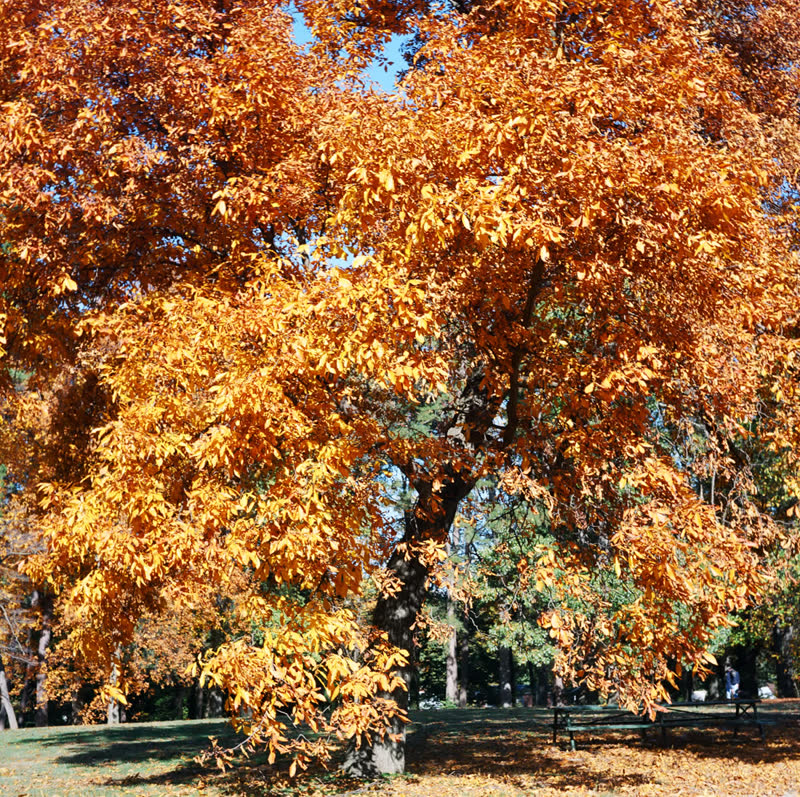
Fall is when Forest Hill Park shows its best side. The hardwood canopy turns in October, and the trail through the wooded section becomes one of the more scenic fall walks in South Richmond. Fewer visitors, good temperatures, and no flooding concerns make this the season to put Forest Hill on the regular rotation.
Winter keeps the park accessible and peaceful. Without leaf cover, the trail opens up and you can see further through the woods. The stone shelter is a good mid-walk stop in cold weather, and the quiet that comes with the off-season makes Forest Hill genuinely restorative.
Frequently Asked Questions
Are dogs allowed in Forest Hill Park Richmond?
Yes. Forest Hill Park is on the City of Richmond’s official list of parks where dogs are permitted. Dogs must remain on leash throughout the park. There is no off-leash dog park area within Forest Hill Park. The nearest fenced off-leash area is Barker Field at Byrd Park, located north of the James River.
How long are the trails at Forest Hill Park?
The main wooded trail loop covers approximately 1.5 to 2 miles depending on route choices. Adding the open field areas and the connector toward the Buttermilk Trail can extend the walk to 3 miles or more. A straightforward park loop without trail extensions takes most people 45 minutes to an hour at a comfortable dog-walking pace.
Does Forest Hill Park connect to the Buttermilk Trail?
Yes. Forest Hill Park has a trail connection to the Buttermilk Trail system at its eastern boundary. The Buttermilk Trail is a technical singletrack corridor that runs along the river bluffs and connects to other James River Park System access points. The connection opens up significantly longer route options for dogs and owners who want more distance. The Buttermilk Trail is best suited to athletic dogs comfortable with uneven terrain.
Is there parking at Forest Hill Park?
Yes. The main parking lot is located off College Avenue at approximately 4000 College Avenue. Parking is free and available in the main lot and along adjacent streets. The lot has adequate capacity for most visits, with the exception of organized events or special park programming. Weekday parking is almost never an issue.
What is the historic stone shelter at Forest Hill Park?
The stone shelter at Forest Hill Park was built in the 1930s as part of a Works Progress Administration project. It’s a low stone structure with an open timber roof, located in the central area of the park. The shelter provides shade and serves as a landmark within the park. It has picnic tables and is sometimes used for small outdoor gatherings. Most dogs find the stone walls worth investigating, and it’s a natural stopping point on a walk through the park.