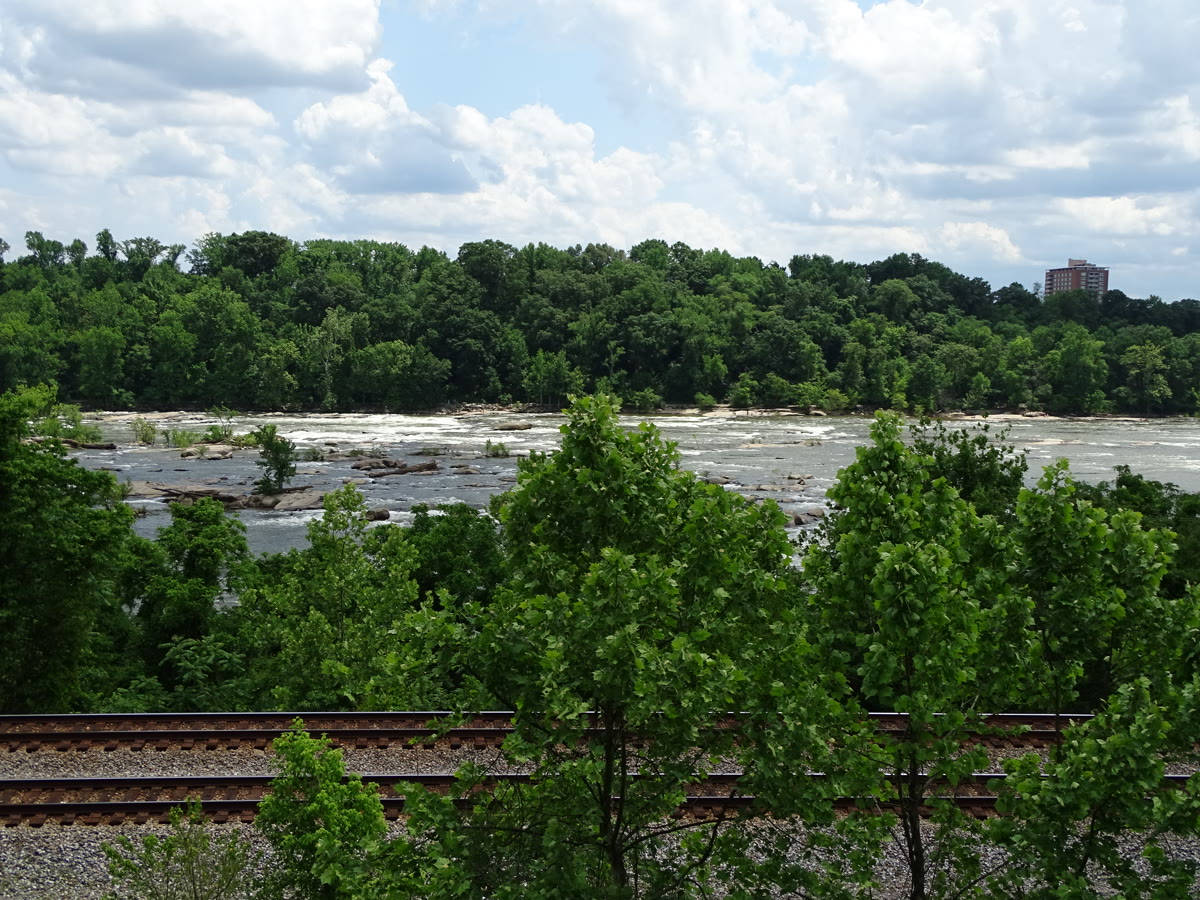
The North Bank Trail and the Buttermilk Trail together form the most serious dog hiking option within Richmond city limits. They run on opposite banks of the James River, they connect at multiple points, and between them they cover enough varied terrain to keep a high-energy dog occupied for a full morning. Both are part of the James River Park System, which covers the full network of Richmond river trails. See the Richmond trails guide for all park destinations in the city.
If you have a dog who needs real exercise rather than a sidewalk stroll, these trails are where you should be spending your Saturday mornings.
North Bank Trail: 2.7 Miles Along the River’s North Side
The North Bank Trail runs 2.7 miles along the north bank of the James River, from the pipeline walkway access near Tredegar Street to the Huguenot Flatwater area in the west. The path travels through the James River Park System and alternates between wooded sections, exposed riverbank, and rocky outcrops with open water views.
The surface ranges from packed dirt to rock scramble. It’s not a maintained gravel path, and that’s part of the appeal. You’re actually in the woods alongside a real river, not walking a manicured greenway. The trail rises and falls with the natural riverbank topography, with some short climbs through the rocky sections near the rapids. Dogs handle most of it easily.
River access is one of the North Bank Trail’s best features. Several points along the trail lead down to the riverbank where dogs can wade, drink, or swim depending on their inclination. The water is the James, which moves faster than it looks, so use common sense near the main channel. The calmer flats near the shore are fine for most dogs.
The trail gets significant use from runners, cyclists on mountain bikes, and dog walkers. The sections near the pipeline access and around the 22nd Street area see the most traffic. The middle and western portions thin out, especially on weekday mornings. If you want the trail to yourself, go early on a weekday.
Buttermilk Trail: 3 Miles of Technical Terrain on the South Bank
Buttermilk Trail runs 3 miles along the south bank of the James River, roughly parallel to the North Bank Trail across the water. It’s more technical terrain than the North Bank Trail. The path climbs, drops, and cuts through rocky sections that require actual attention to footing. Trail runners use this route heavily, and for good reason.
For dogs, Buttermilk is a genuinely good workout. The elevation changes are real, and the rocky stretches require dogs to pick their way carefully rather than just following the terrain. Larger, athletic dogs typically love this; senior dogs or dogs with joint issues should probably stick to the flatter North Bank route.
The trail surface is primarily dirt and rock. After rain, the lower sections near the river can be muddy, and the rock sections get slick. Wet-weather visits require boots for humans who don’t want to slide, and some judgment about which sections to push through vs. walk around.
There are several points where Buttermilk drops down to river access. The riverside flats along the south bank tend to be wider and calmer than the north bank alternatives, and they’re popular gathering spots for dogs and owners on weekend mornings.
Connecting the Two Trails for Longer Hikes
The North Bank and Buttermilk Trails connect at the pipeline walkway, a pedestrian crossing that spans the James River and allows you to cross between banks. This connection point is the key feature that makes both trails something more than individual out-and-backs.
The most common extended loop from serious trail users combines: North Bank Trail west to east, pipeline crossing south to north, and Buttermilk east to west. That routing covers roughly 5 to 6 miles depending on exactly where you start and how many side paths you take down to the river. For a dog with real energy, it’s a full outing.
The pipeline walkway is the thin catwalk you’ll see from the river running parallel to the CSX railroad trestle. It’s narrow, exposed, and has no solid railing on one side, which can be challenging for dogs who are nervous about heights or open grating underfoot. Some dogs cross without hesitation; some refuse entirely. Know your dog before you commit to the crossing.
Sharing the Trail
Both trails are heavily used by runners and mountain bikers, and the trail sharing situation requires some awareness. The North Bank and Buttermilk Trails are technically multi-use, meaning cyclists have legal right to be there alongside pedestrians and dogs.
On busy weekend mornings, particularly the sections near the rapids that attract mountain bikers, expect to step off the trail frequently. Bikes will come from behind without always giving advance warning. A dog off-leash here is a dog who might suddenly be in a cyclist’s path, which is bad for everyone. Keep your dog on a 6-foot leash and stay alert, especially in the sections with limited sightlines. The trail etiquette guide covers the right-of-way conventions for multi-use trails. The North Bank Trail access near Tredegar is especially convenient for dog owners from The Fan and nearby central Richmond neighborhoods.
Weekday mornings dramatically reduce the traffic. If you want a meditative, uncrowded trail experience, a Tuesday or Wednesday at 7 a.m. is a different walk than Saturday at 10 a.m.
Practical Information
Parking: The main access points are at Texas Beach off Riverside Drive (south bank access point for Buttermilk Trail), and at the Tredegar Street area near the American Civil War Museum (north bank access for North Bank Trail). Both have limited parking that fills quickly on weekends. The Pipeline access point has a small pullout off Riverside Drive as well.
Leash rules: Dogs should be leashed throughout the James River Park System, which includes both trails. In practice, you’ll see plenty of off-leash dogs, especially on quieter weekday mornings. The official policy is on-leash, and park rangers do patrol.
Water for dogs: River access is frequent enough that thirsty dogs can drink along most of the route. Bring a collapsible bowl regardless.
Surface conditions after rain: Buttermilk Trail specifically gets muddy and slick after significant rain. The North Bank Trail’s rocky sections don’t drain as problematically, but some of the lower path sections along the river can be wet. Wait 24 hours after heavy rain before visiting Buttermilk if you want dry footing.
What to bring: Standard trail kit applies. Water, waste bags, a leash rated for your dog’s strength. The rocky sections on Buttermilk can be hard on dog paw pads if your dog isn’t used to rough terrain. See the what to bring guide for a full packing list for longer Richmond trail outings. Tick exposure is significant on both trails from spring through fall . See the tick and flea prevention guide for the post-hike protocol.
Best Times to Visit
Fall is the best season on both trails. The foliage change along the river is excellent, temperatures are comfortable for extended hiking, and the crowds thin substantially from their summer peak. October Saturday mornings on Buttermilk Trail are some of the better trail experiences in the Richmond area.
Summer mornings work if you start by 7:30 a.m. and accept that you’ll be turning around before it gets hot. The tree canopy on both trails provides meaningful shade, but the rocky exposed sections in the midday heat are not comfortable for dogs. Bring more water than you expect to need.
Winter hiking on the North Bank Trail is a good option because the trail stays functional in most weather and the scenery is worth the cold. Buttermilk’s technical sections are more challenging in winter because frozen or wet rock is genuinely slippery. Choose the North Bank Trail for cold-weather visits unless you’re comfortable with the terrain.
Frequently Asked Questions
Are dogs allowed on the Buttermilk Trail in Richmond? Yes. The Buttermilk Trail is part of the James River Park System, which permits dogs on leash throughout. There are no designated off-leash areas on the Buttermilk Trail. Dogs should remain leashed due to the trail’s popularity with cyclists and runners.
How difficult is the Buttermilk Trail for dogs? The Buttermilk Trail is moderately technical with real elevation changes and rocky sections. Athletic dogs handle it without difficulty. Senior dogs, dogs with joint issues, or dogs new to trail hiking may find the terrain challenging. The North Bank Trail on the opposite bank offers a more accessible alternative with similar river views.
Can I combine the North Bank Trail and Buttermilk Trail in one hike? Yes. The two trails connect at the pipeline walkway, a pedestrian crossing that spans the James River. A full loop using both trails covers roughly 5 to 6 miles. The pipeline walkway is narrow and exposed, which some dogs find stressful.
Where do I park for the Buttermilk Trail and North Bank Trail? For Buttermilk Trail access: Texas Beach off Riverside Drive (south bank). For North Bank Trail access: Tredegar Street area near the American Civil War Museum or off 22nd Street. Both parking areas fill quickly on weekend mornings. Arrive before 8:30 a.m. on Saturdays to find a spot without waiting.
Is the North Bank Trail or Buttermilk Trail better for dogs? It depends on your dog. The North Bank Trail (2.7 miles) is less technical, more accessible for dogs of varying fitness levels, and has good river access throughout. The Buttermilk Trail (3 miles) has more elevation change and rocky terrain that suits athletic dogs and provides a more physical workout. Most regular users combine both for longer outings.